
Message
If you have any questions, please contact us and we will contact you as soon as possible.
‹
›
‹
›
Production capacity: 25-240 m³/h
Main Types: Skip Hopper Type / Belt Conveyor Type
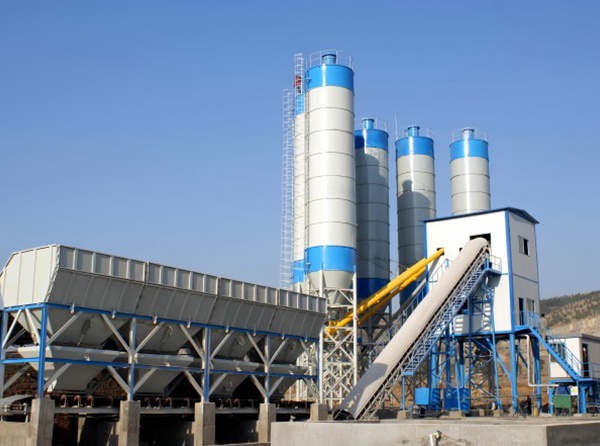
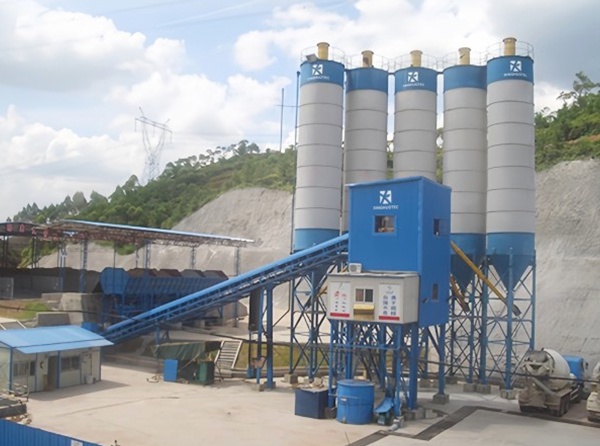
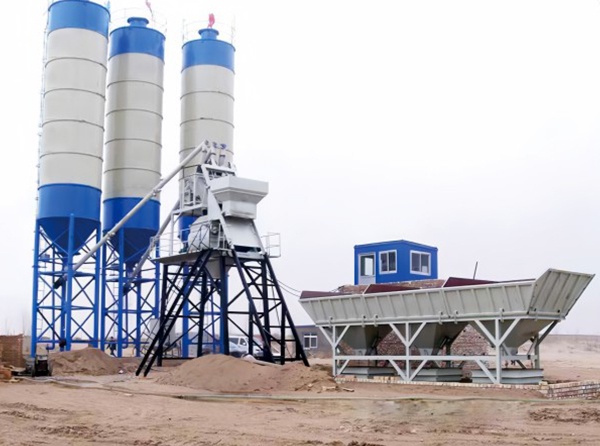
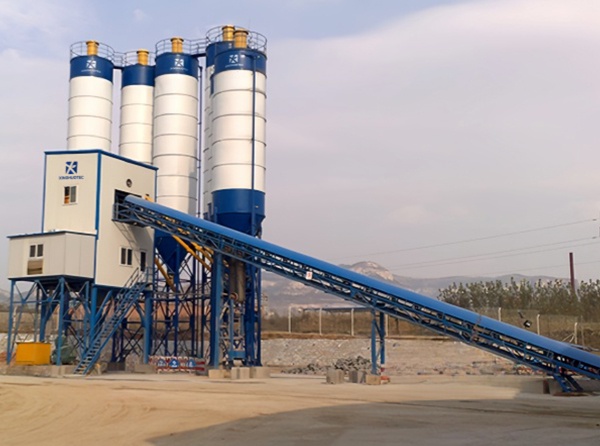
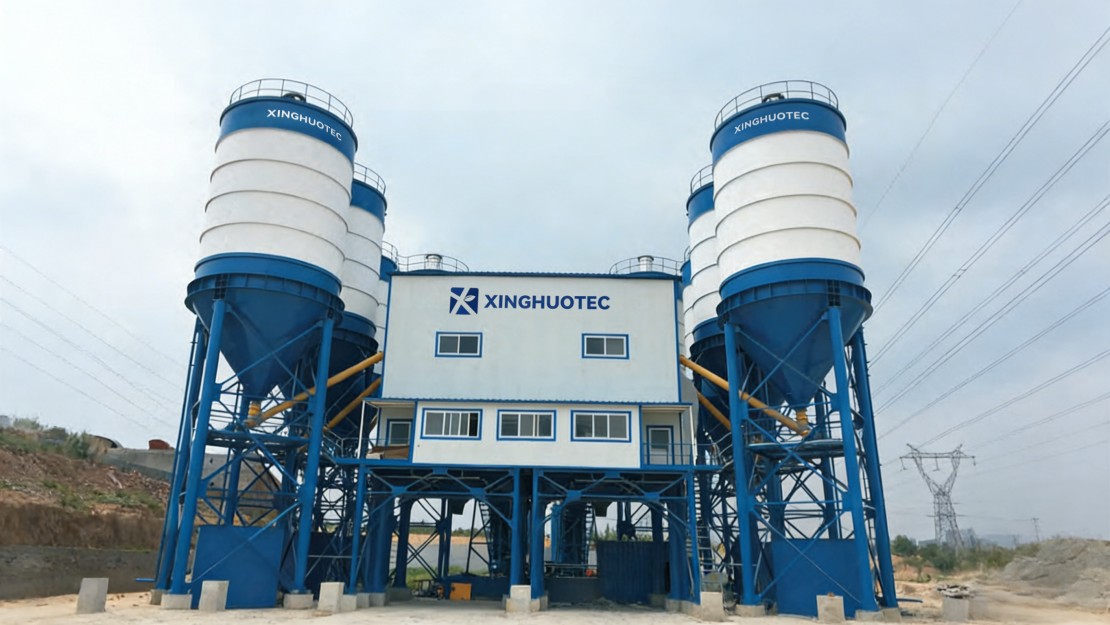
Stationary Concrete Batching Plant Product Overview
Concrete batching plant is a complete set of specialized equipment for producing fresh concrete. It is equipped with devices for storing, batching, conveying, mixing, and controlling various raw materials required for concrete preparation. The plant mixes various raw materials of concrete, such as cement, sand and gravel aggregates, admixtures, additives, and water, in fixed proportions through a mixer, continuously and efficiently producing qualified finished concrete.
Stationary concrete batching plants are mainly divided into two types: the skip hopper type and the belt conveyor type. They are designed for large-scale, standardized concrete production. They are widely used in large-scale construction projects, commercial concrete batching plants, prefabricated component factories, and other scenarios, they have become indispensable core equipment in modern engineering construction.
Stationary Concrete Batching Plant Application Scenarios
Featuring stable mass production capacity and high-precision proportioning performance, the stationary concrete batching plant is widely used in long-term construction scenarios that require strict requirements on concrete output and quality, and is suitable for various types of projects, including:
● Commercial Concrete Mixing Station: Specialized in commercial concrete production to supply various projects such as surrounding buildings, municipal engineering, roads and bridges. It supports 24-hour continuous production to meet large-scale concrete demand.
● Large-Scale Construction Projects: For projects such as high-rise buildings, commercial complexes and industrial facilities that require large volumes of high-quality concrete, the stationary mixing plant can stably provide concrete that meets the required strength grades, ensuring project quality.
● Road and Bridge Engineering: For infrastructure construction such as highways, expressways, cross-sea bridges and tunnels that require concrete with excellent frost resistance, crack resistance, and abrasion resistance, the equipment can accurately ensures precise batching and produce specialized concrete that meets engineering standards.
● Precast Component Manufacturing: The production of precast floor slabs, beams, piles and other concrete components requires standardized and highly consistent concrete. The stationary mixing plant can ensure consistent component quality and improve production efficiency.
● Water Conservancy and Port Engineering: For projects such as reservoirs, dams and ports that require corrosion-resistant and high-strength concrete, the equipment is compatible with a wide range of aggregates and admixtures to meet diverse engineering requirements.
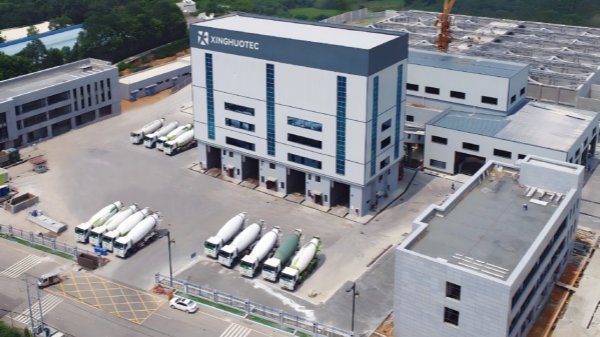
Commercial Concrete Mixing Station
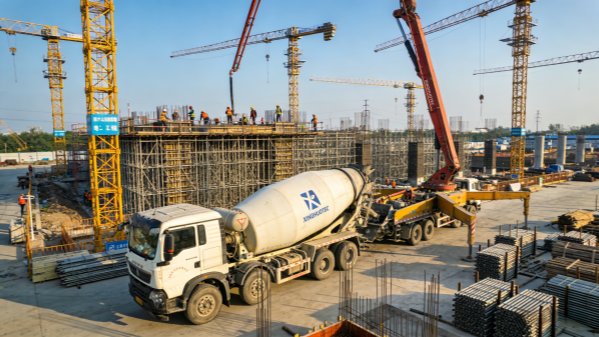
Industrial Workshop Construction
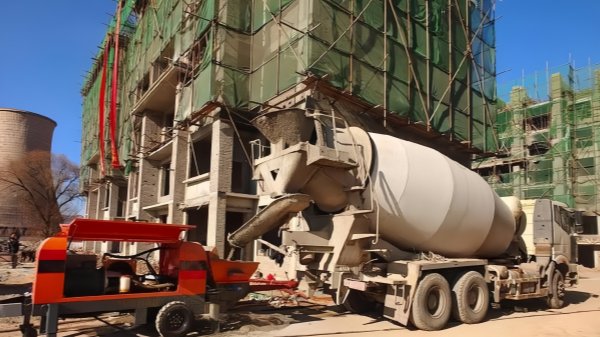
Residential Construction
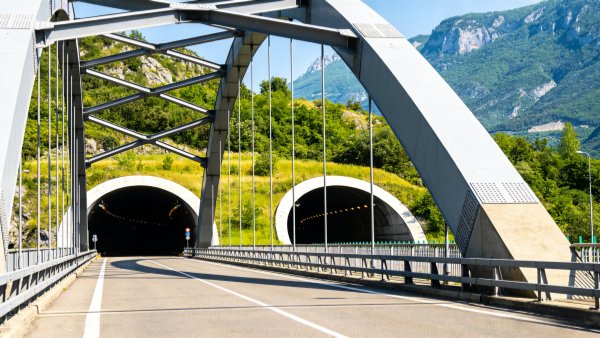
Road and Bridge Engineering
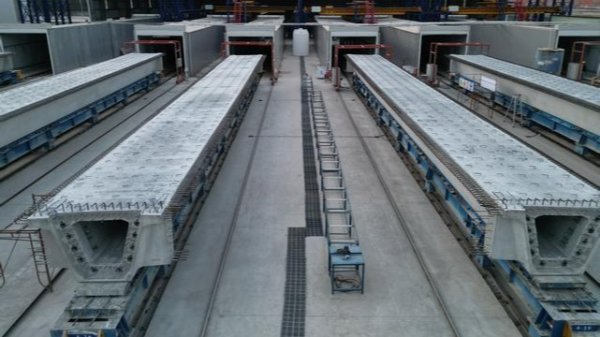
Precast Component Factory
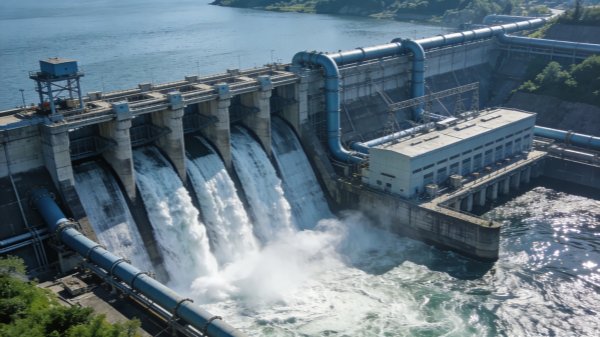
Water Conservancy Projects
Stationary Concrete Batching Plants: Belt Type & Hopper Type
XINGHUOTEC stationary concrete batching plants are available in two types: Skip Hopper Type and Belt Conveyor Type. It is divided according to feeding method, production capacities and site conditions to meet different construction needs. The main features and specifications and characteristics are as follows:
Belt Conveyor Type Concrete Batching Plant
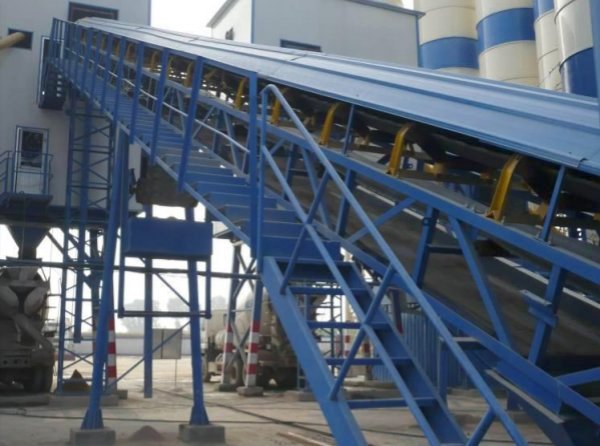
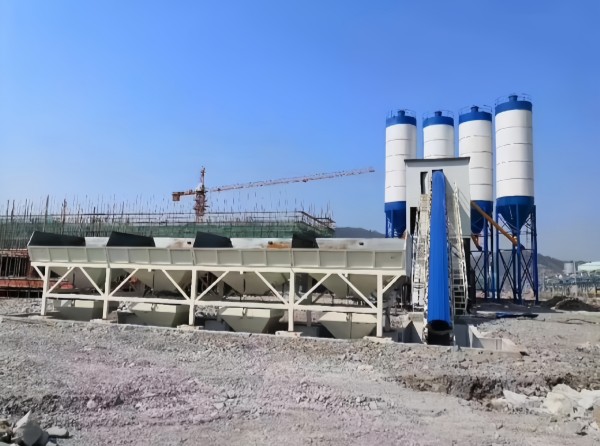
It uses a belt conveyor for aggregate feeding, with high feeding efficiency and continuous material handling. It is the ideal choice for large-scale projects and commercial concrete mixing stations. Its core characteristics are high production capacity and high level of automation, suitable for large-scale and continuous concrete production.
● Feeding method: The belt conveyor feeds materials horizontally or obliquely, which can enable simultaneous transportation of multiple aggregate bins, with fast feeding speed and reduced waiting time.
● Production capacity: 60-240 m³/h, the mainstream models are HZS60, HZS90, HZS120, HZS180, HZS240, which are suitable for large-scale projects and commercial concrete production.
● Core advantages: High feeding efficiency, continuous production, accurate weighing, compatibility with large-scale mixing hosts, high level of automation, good long-term operation stability, suitable for reliable long-term operating stability.
● Applications: Commercial concrete mixing stations, large-scale buildings, highways, bridges, ports and other large-scale projects, as well as scenarios that require continuous mass production of concrete. It can be equipped with a closed belt design to minimize dust emissions.
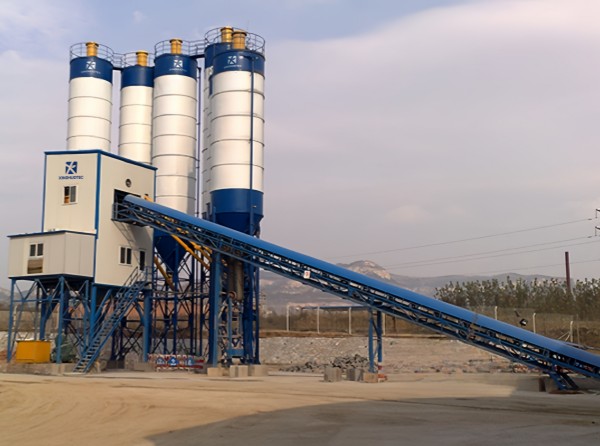
Skip Hopper Type Concrete Batching Plant
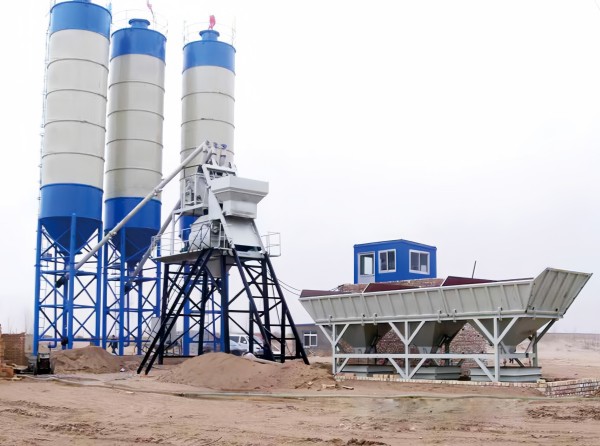
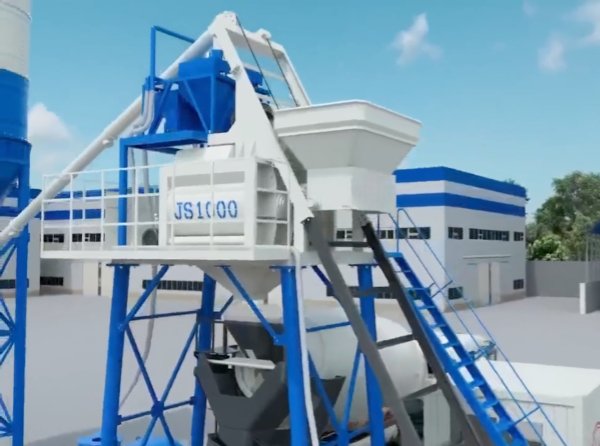
It uses a vertical skip hopper elevator to transport aggregates,featuring a compact structure and small footprint. It is the ideal model for small-and- medium-sized projects and projects with limited site space. Its key advantages include cost-effectiveness and easy installation, making it suitable for small-to- medium-volum concrete production.
● Feeding method: The skip hopper elevator lifts aggregates vertically, requiring minimal horizontal space, and is suitable for confined construction sites, mountainous areas and other complex terrain scenarios.
● Production capacity: 25-75m³/h, the mainstream models are HZS25, HZS35, HZS50 and HZS75, which are suitable for small and medium-sized construction projects.
● Core advantages: Compact structure, small footprint, low initial investment, low energy consumption, short installation time, easy maintenance, suitable for short-term construction or budget-conscious customers.
● Applications: Rural self-built houses, small municipal projects, mountainous projects, small and medium-sized precast component factories, and scenarios where long-distance belts cannot be laid due to limited space.
Specifications of Stationary Concrete Batching Plants
The following are the key technical specifications of the typical models of XINGHUOTEC stationary concrete batching plant (skip hopper type and belt type). Customized configurations are available to meet specific project requirements.
Main Systems of Concrete Batching Plant
XINGHUOTEC stationary concrete batching plant consists of 6 core systems that work together to achieve efficient, automated, and standardized concrete production. Each system undergoes rigorous quality testing to ensure reliable performance and long-term operational stability. The main systems are as follows:
Aggregate Storage and Batching System
● Main composition: Aggregate Bins (2-4 bins available), batching machine, weighing hopper;
● Function: Stores aggregates such as sand and gravel and automatically weighs them according to the preset proportion, ensuring accurate batching of various aggregates. The skip hopper type is equipped with a compact batching machine, and the belt type is equipped with a large multi-bin batching machine, which is suitable for different production capacity requirements. Aggregate bin capacity can be customized according to customer requirements.
Belt Type Concrete Batching Plant
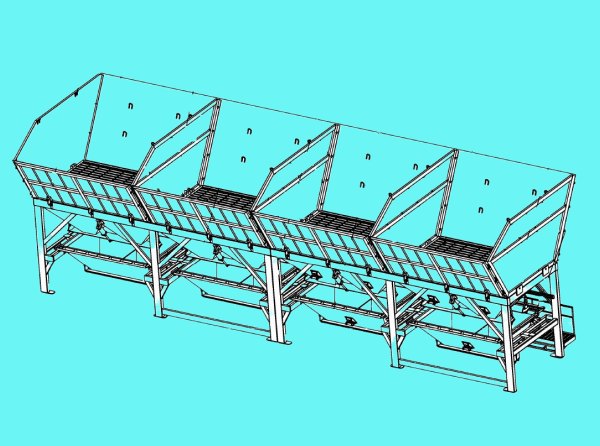
Aggregate Batcher
Powder Storage and Conveying System
● Main composition: Cement silo, fly ash silo, screw conveyor and dust collector;
● Function: Stores powder materials such as cement and fly ash, and accurately conveys them to a weighing hopper via a screw conveyor forfor precise weighing. A high-efficiency dust collector effectively reduces dust emissions during material handling. Cement silo capacities range from 50 to 250 tons, with 1-4 available to meet different production capacity requirements. The export-type bolted cement silo design allows for convenient packing, transportation, and on-site installation.
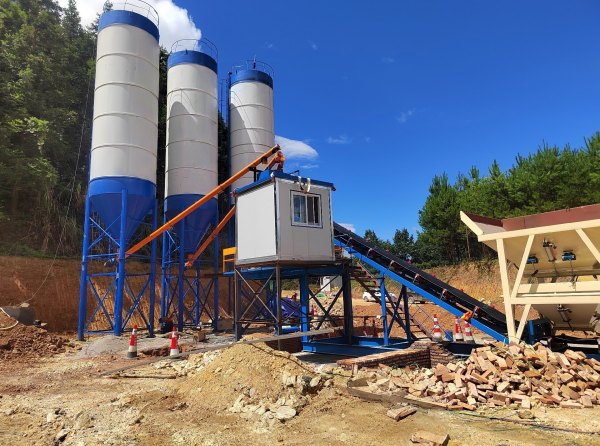
Belt Type Concrete Batching Plant
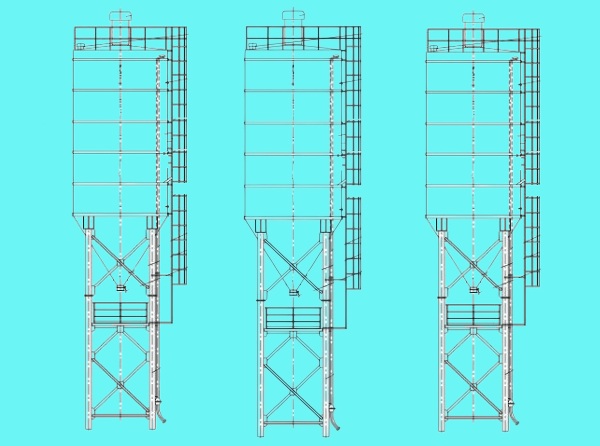
Cement Silo
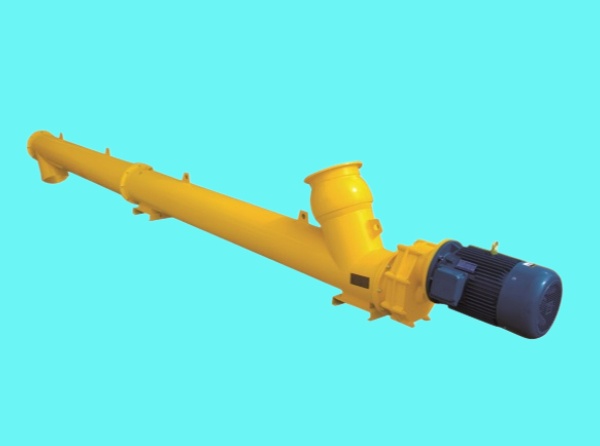
Screw Conveyor
Metering System
● Main composition: Electronic weighing sensor, weighing hopper (aggregate, cement, water and admixture are measured independently), metering control system;
● Function: Precisely controls the weighing of each material with high weighing accuracy and fast response.The system features an automatic compensation function that corrects deviations in real time, ensuring accurate concrete batching and compliance with engineering quality requirements. The weighing range can be flexibly adjusted according to different model.
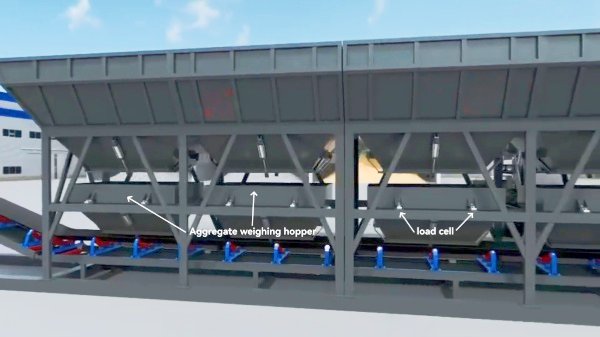
Aggregate weighing system
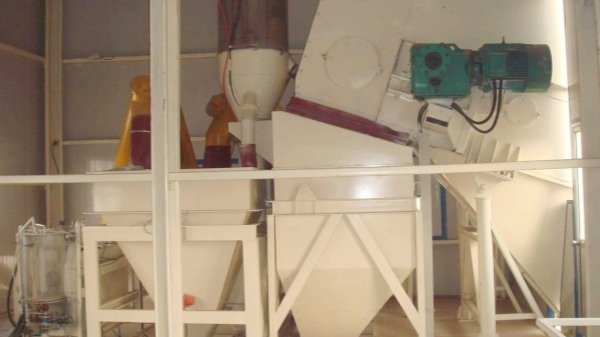
Powder weighing system
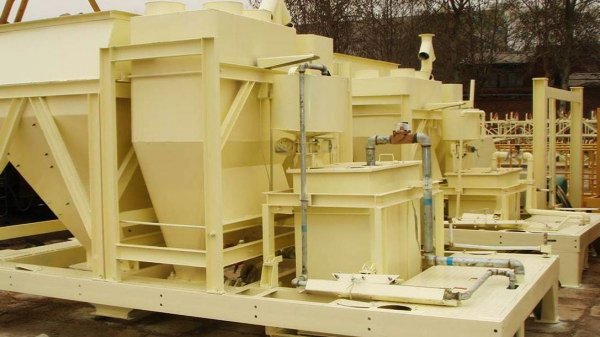
Water and admixture weighing system
Mixing System
● Main composition: XINGHUOTEC are typically equipped with twin-shaft mixers and can also be equipped with vertical planetary mixers according to customer requirements.The standard configuration includes XINGHUOTEC mixers, but you can also choose to install a SICOMA mixer as an option.
● Function: Thoroughly mixes accurately weighed aggregates, cement, water and admixture evenly. The mixing unit adopts twin-screw belt design, with powerful mixing performance, uniform material mixing, no dead zones and high mixing efficiency. The mixing blades and liners are manufactured from high-wear-resistant materials, ensuring a long service life and adapting to the production requirements of concrete with different strength grades.
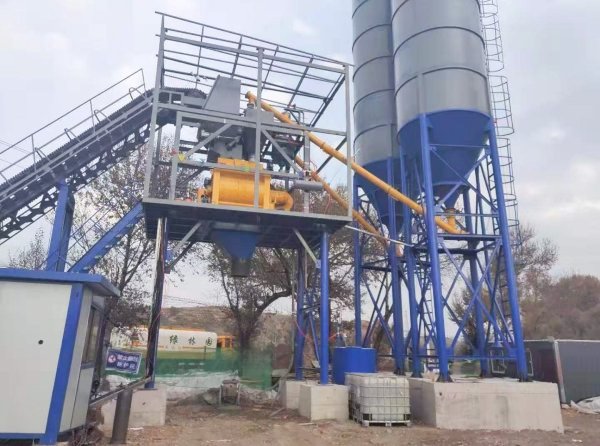
Mixing System
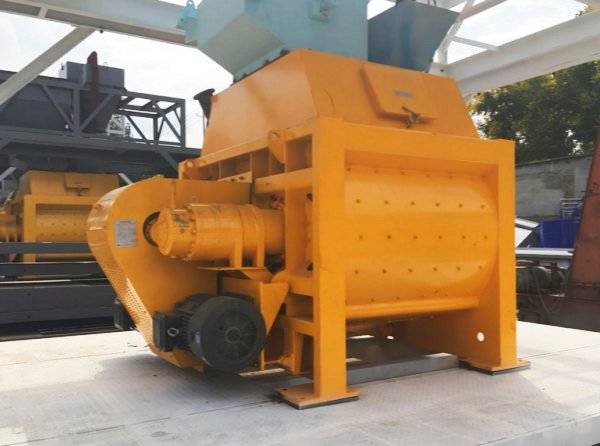
Twin-shaft Mixer
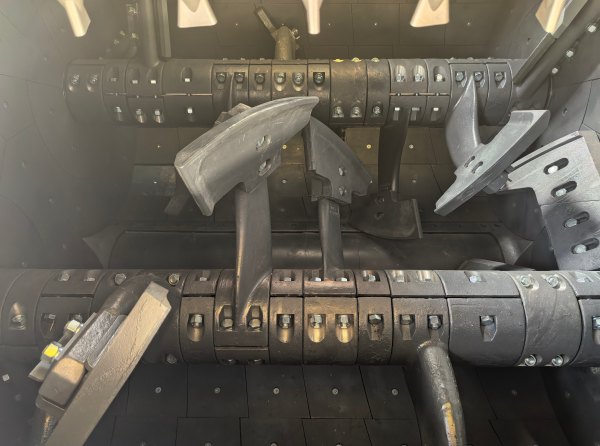
Mixing Blade
Conveying System
● Main composition: Skip hopper elevator (skip hopper type), belt conveyor (belt type) ans discharge chute;
● Function: The Skip Hopper Type vertically transports aggregates to the mixing unit through a skip hopper elevator, featuring a compact structure and a small footprint. The belt type transports aggregates horizontally/obliquely through the belt conveyor with high feeding efficiency and continuous material handling. Based on belt surface designs, inclined belts are classified into: Suitable for conveying angles ≤ 20°; Chevron / herringbone belt: for conveying angle ≤ 30°; Cleated / sidewall belt: for conveying angle ≤ 45°. The discharge chute is used to transport the mixed concrete to the concrete mixer truck, and the angle can be flexibly adjusted to adapt to different models.
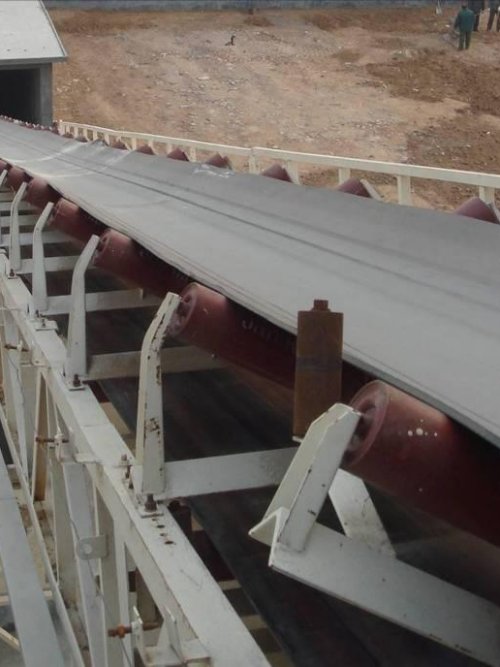
Flat belt
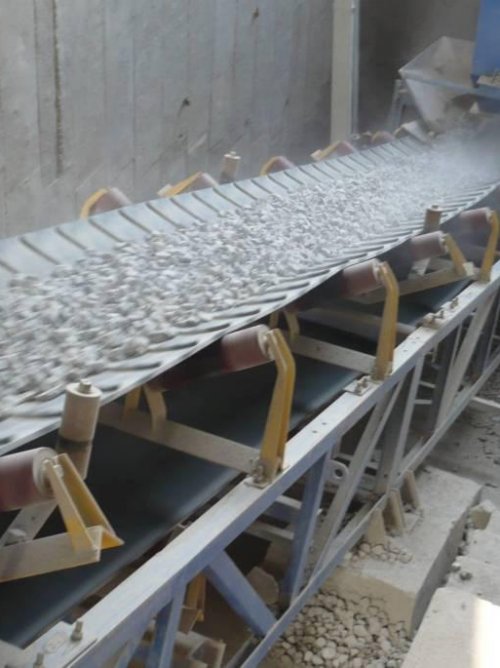
Chevron / herringbone belt
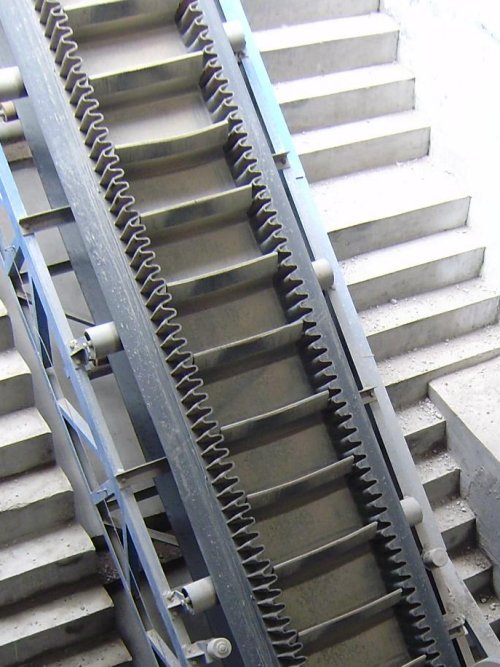
Cleated / sidewall belt
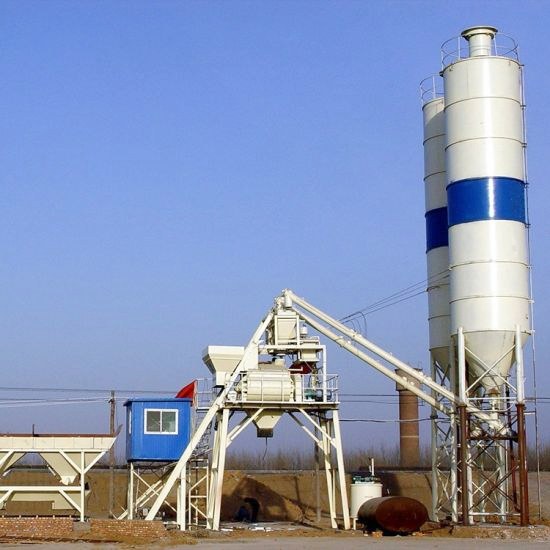
Hopper Type Batching Plant
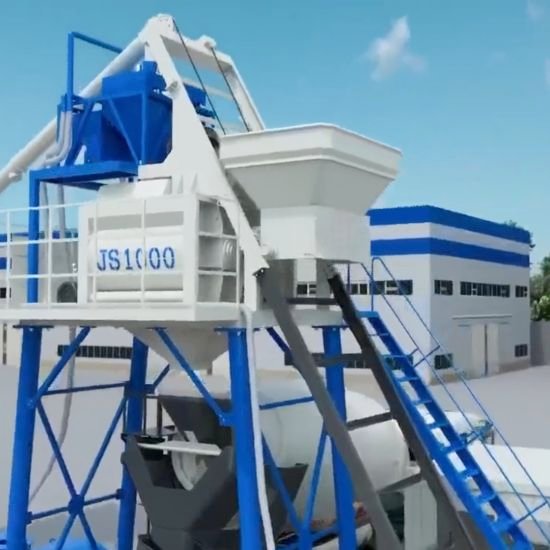
Hopper Elevator
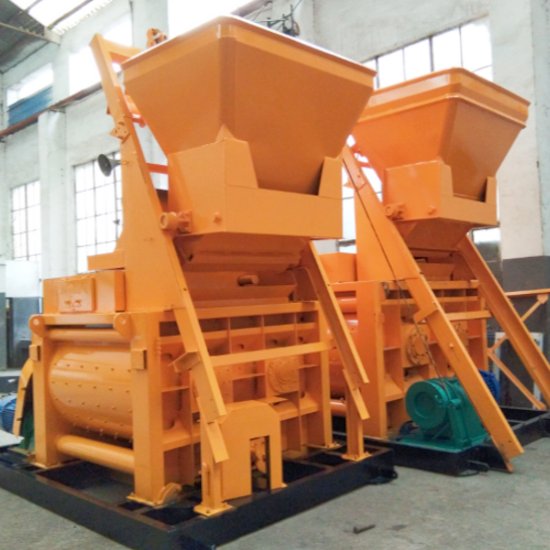
Hopper
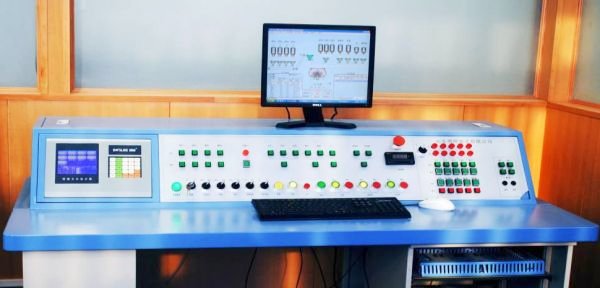
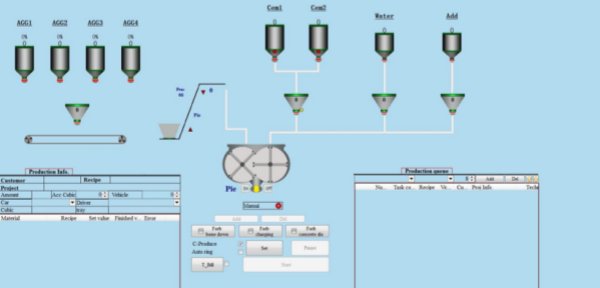
Control System
● Main composition: PLC control cabinet, touchscreen human-machine interface (HMI), sensors and alarm devices.
● Function: Enables automatic equipment control, which can preset parameters such as concrete proportioning, mixing time and discharge volume. After one-touch start, the systems automatically complete the whole process of batching, mixing and discharging. It monitors equipment operating status in real time, provides automatic fault alarms, and records production data for convenient statistics and management. The system supports both manual and automatic operation modes to handle unexpected situations.
Control System
Control System
Advantages of XINGHUOTEC Concrete Batching Plants
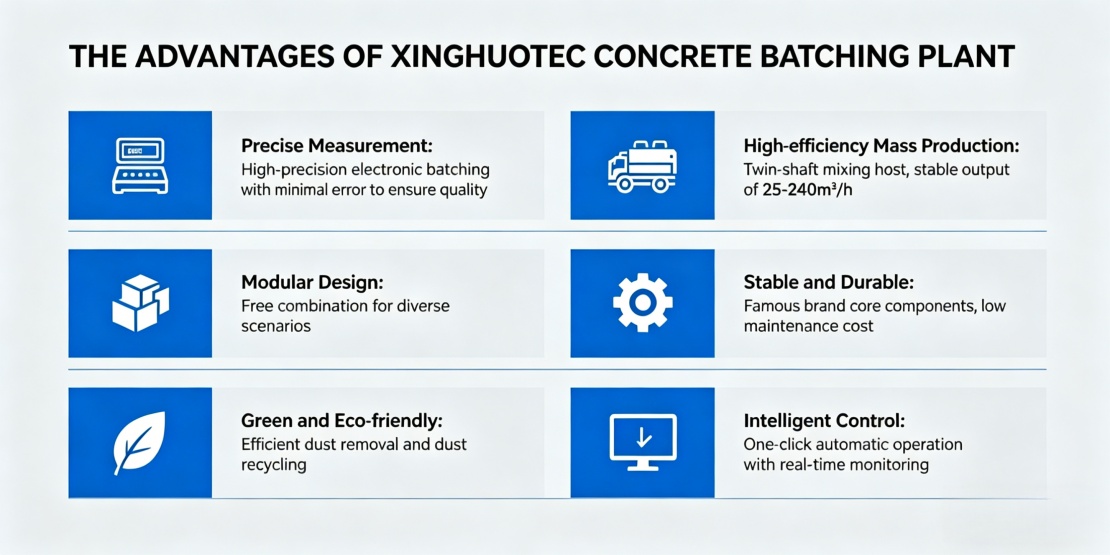
● Precise measurement to ensure concrete quality - Equipped with high-precision electronic weighing system, aggregate, cement, water and admixture are measured independently, and the measurement accuracy meets international standards (aggregate ±2%, cement, water, admixture ±1%), which effectively avoids proportioning deviations, ensures uniform concrete strength and stable performance, and meets the quality requirements of different projects.
● High-efficiency mass production to improve construction efficiency - The skip hopper type delivers stable production capacities of 25-75m³/h, and the belt type can reach 90-240m³/h. Equipped with high-efficiency twin-shaft mixer, the mixing efficiency is increased by 15%, the materials move in double directions, the mixing is strong and uniform, the mixing cycle is shortened, which can meet the continuous construction needs of large-scale projects and greatly improve the construction efficiency.
● Modular design for flexible configuration - The modular structure allows flexible integration of the mixing unit, batching system, storage equipment, and conveying system according to customer requirements. The skip hopper type and belt type can be selected on demand, and it also supports later expansion and upgrading, adapting to the needs of different outputs and different sites, and reducing the initial investment cost.
● Stable and durable, easy maintenance - Key components (mixing unit, reducer, weighing sensor, belt conveyor/skip hopper elevator) are selected from well-known brands. The mixing blades and liners are made of high-wear-resistant chromium-manganese alloy, which is wear-resistant and corrosion-resistant, with long service life. The optimized equipment structure features fewer maintenance points and simple operation, reducing long-term maintenance costs and failure rates.
● Green and environmentally friendly - Equipped with high-efficiency dust removal system, both powder silos and aggregate bins are equipped with dust collectors, and the recovered powder can be reused to save costs. . An optional enclosed belt conveyor further minimizes dust dispersion, meeting environmental protection requirements in both domestic and international markets.
● Intelligent control, convenient operation - Equipped with a PLC automatic control system, which can realize one-touch start, automatic batching, automatic mixing and automatic discharging, simple and easy to operate and reducing the need for highly skilled operators. The touchscreen human-machine interface (HMI) enables real-time monitoring of equipment status, parameter adjustment, fault alarms, and production data recording, facilitating efficient equipment management and maintenance.
How to Choose a Suitable Concrete Batching Plant?
When purchasing a stationary concrete batching plant, it is necessary to consider your engineering needs, site conditions, budget and long-term development plan, and focus on the following 6 core points to avoid blind purchase, ensure that the equipment adapts to actual needs, and maximize cost performance:
● Clarify the output demand and select the appropriate model - Determine the equipment output according to the daily concrete demand: For small and medium-sized projects (daily output ≤500m³), you can choose the skip hopper type (25-75m³/h); For large-scale projects and commercial concrete mixing stations (daily output ≥800m³), you can choose the belt type (90-240m³/h) to avoid affecting construction due to insufficient output or cost waste due to excessive output.
● Consider site conditions when selecting the feeding method - For narrow sites where long-distance belts conveyors cannot be installed, prioritize the skip hopper type (small footprint, vertical feeding); For open sites that require continuous feeding, select the belt type (high feeding efficiency, continuous material handling), and consider the bearing capacity of the site to ensure stable equipment installation.
● Pay attention to the quality of core components to ensure stable operation - Focus on checking the brand and quality of core components such as mixer, reducer, weighing sensors, and conveying equipment and prioritize well-known brand components to ensure stable equipment operation and long service life, reduce later failures and maintenance costs, and pay special attention to the wear resistance of mixing blades and liners.
● Confirm the weighing accuracy to ensure concrete quality - The measurement system is the core of concrete quality. When purchasing, it is necessary to confirm whether the measurement accuracy meets international standards (aggregate ±2%, cement, water, admixtures ±1%), and whether it has automatic compensation and calibration functions to avoid substandard concrete quality due to weighing deviation.
● Evaluate manufacturer capabilities and after-sales support - Prioritize manufacturers with complete production capacity, proper certifications and good reputation (such as XINGHUOTEC), and verify their production capacity, testing procedures, and R&D capabilities; At the same time, confirm the after-sales support system, including quality guarantee period and spare parts supply capacity.
FAQs about Stationary Concrete Batching Plants
Q: What is the difference between stationary and mobile concrete batching plants?
A: Stationary plants have larger capacities, more stable structures, and higher levels of automation for long-term fixed production. Mobile plants are easy to relocate and install quickly, suitable for short-term, scattered, or mobile construction sites.
Q: How long does installation take?
A: For a standard stationary plant, it normally takes 7 to 15 days from arrival to commissioning, depending on the model and site conditions.
Q: What are the power and air consumption requirements?
A: Total power consumption is about 120–180kW for HZS120. A 0.6–0.8MPa air compressor is required for the pneumatic system.
Q: How much space does the plant need?
A: Taking HZS120 as an example, the standard layout covers about 1000–1500㎡, depending on silo quantity and layout.
Q: Does the plant support fully automatic control?
A: Yes. It is equipped with a fully automatic computer control system for automatic weighing, mixing, discharging, data recording and printing.
Q: Can it produce concrete of different strengths?
A: Yes. It can produce C15, C20, C25, C30, C35, C40 and higher grades by switching formulas in the control system.
Q: What are your warranty and after-sales services?
A: We provide 12-months warranty for the whole machine (excluding wearing parts), along with lifelong technical support, on-site installation, operator training and fast spare parts supply.
Contact Us for Customized Solutions
If you have any demands, such as customized parameters, model selection or price inquiry, please contact us immediately. We will offer you the most suitable solutions and competitive price!
◉ Inquiries & Messages
◉ Related Products

Inquiries & Messages
Thank you very much for writing to us. Please leave your message and contact information, we will reply to you within 24 hours.